
Does Mushroom Coffee Expire? Storage and Freshness
Learn how to read the date, store mushroom coffee well, and spot when an opened bag is no longer at its best.

Mushroom coffee does not stay at its best forever, but the date on a dry bag is usually a quality guide rather than a reason to panic. The practical question is not just whether the date has passed. It is whether the coffee has stayed dry, sealed, and pleasant to brew. A neglected bag can lose its aroma and taste flat long before it becomes an obvious problem. A well-kept bag can still make a decent cup near its best-by date.
Treat mushroom coffee much like the coffee you already know. The mushroom ingredients are dry, but the coffee portion still reacts to air, heat, light, and moisture. Start with the package instructions and date, then use your senses. If the blend smells normal, looks dry, and has been stored carefully, it may simply be less lively than it was when first opened. If it is damp, moldy, or has an off smell, it is time to let it go.
This guide covers the simple decisions that matter most: how to read a package date, where to keep an opened bag, what to do with instant coffee, and when a cup is no longer worth brewing. It also helps you protect the fresh-roasted character that makes a daily coffee ritual feel worth repeating.
Start With the Date on the Package
Check the package first. A best-by date is commonly about peak quality, not a promise that a dry, unopened product becomes unsafe at midnight. The exact date and storage guidance printed by the maker should always lead, because formats and ingredients vary. That is especially important with mushroom coffee, where one product may be ground coffee for brewing and another may be an instant blend.
For unopened dry coffee, the National Coffee Association recommends using the best-by date as the freshness guide. Once a bag is opened, aroma is usually the first thing to fade. You may notice that a once-fragrant bag smells quiet, or that the brewed cup tastes dull rather than full. That is a freshness issue. It does not automatically mean the coffee is spoiled.
Avoid treating a web-wide timeline as a substitute for your own label. Store packaging, roast style, grind size, and how often the container is opened all change the result. If you want the most satisfying cup, buy a size you can use comfortably and write the opening date on the bag with a marker. That small habit is more useful than guessing how long it has been in the cabinet.
- Use the package date and storage directions as your first reference.
- Mark the day you open a bag or jar.
- Expect flavor and aroma to fade before a dry coffee necessarily becomes unsafe.
- When the label and your senses disagree, choose caution.
The Four Things That Steal Freshness
Air, moisture, heat, and light are the usual reasons coffee loses its spark. The National Coffee Association’s coffee storage guidance recommends an airtight, opaque container in a cool, dark place. Those basics matter for mushroom coffee too. They protect the coffee’s aroma and keep humidity from turning an easy morning scoop into a clumpy mess.
Moisture is the one to take most seriously. Do not use a wet spoon, store a bag beside a steaming kettle, or leave the container open while you make breakfast. Dry powders and grounds can draw in humidity. Once that happens, the blend may cake together, smell strange, or develop visible changes that are not worth ignoring. Keep the scoop dry and close the container promptly.
Heat and light are slower thieves. A cabinet above the stove, a sunny counter, or a spot beside the dishwasher may feel convenient, but each one exposes coffee to more warmth than it needs. Choose a cupboard or pantry shelf away from appliances. You do not need a specialty vault, just a consistently cool, dry home.
How to Store Ground Mushroom Coffee
Ground coffee has more exposed surface area than whole beans, so its fragrance can fade quickly once the seal is broken. Keep it in the original bag if it has a reliable reseal, or transfer only the amount you will use soon to a clean, dry, airtight container. An opaque container is useful because light cannot reach the coffee each time you open the cabinet.
If you make mushroom coffee with a drip machine, pour-over, or French press, build storage into your brewing routine. Take out the coffee, measure what you need, press out excess air from the bag if appropriate, and return it to the cupboard. The fewer long, open-counter pauses a bag gets, the more of its fresh character it keeps.
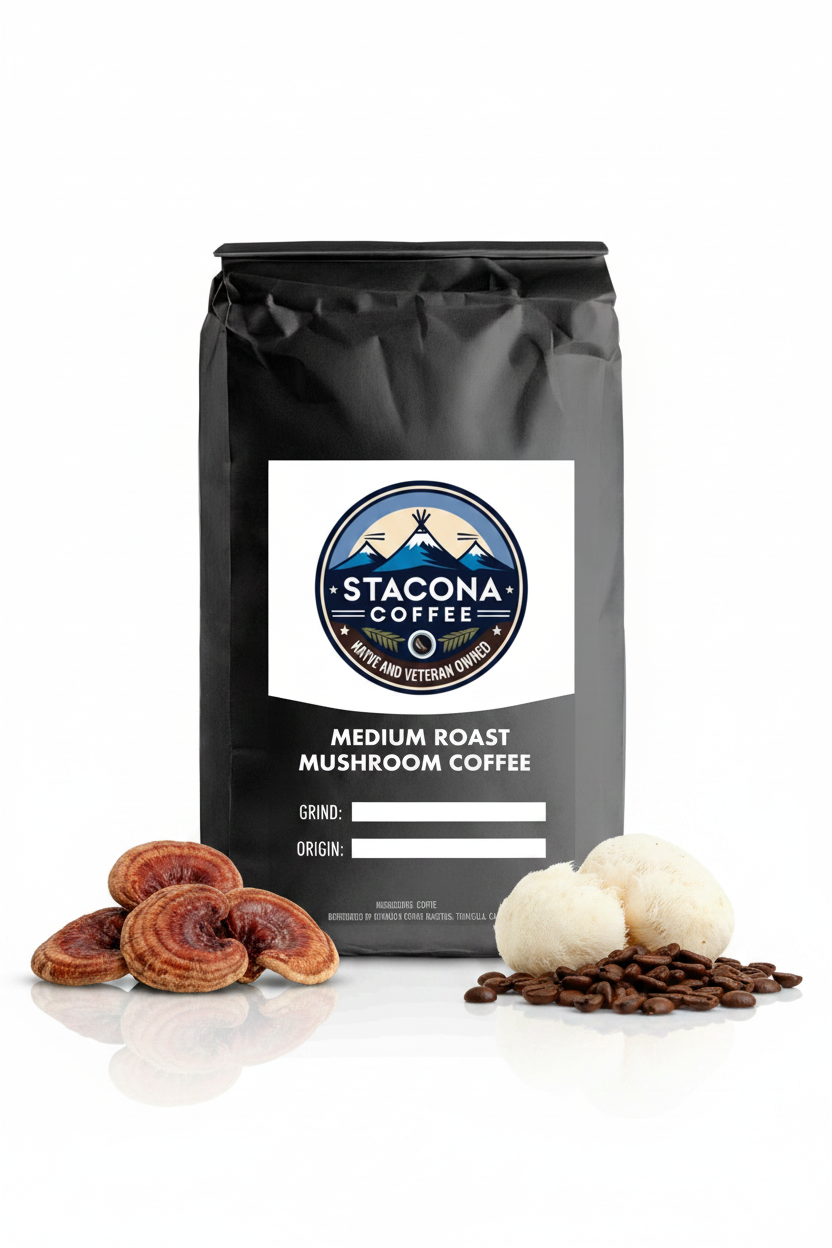
For a familiar brewed cup, Stacona’s Coffee with Mushrooms Medium Roast gives you a smooth place to start. Prefer a bolder direction? Coffee with Mushrooms Dark Roast can be stored with the same simple approach. Fresh storage does not change the coffee’s style, it helps you taste the style you chose.
Instant Mushroom Coffee Needs a Dry Routine Too
Instant coffee is convenient because it dissolves quickly, but it still needs protection from humidity. Keep the lid or seal tight, use a completely dry spoon, and avoid leaving the jar near a sink or kettle. Individual packets offer a little extra protection because the rest of the coffee stays sealed until you need it. A larger pouch or jar can work beautifully too, as long as you close it right away.
If instant granules begin to form hard clumps after exposure to moisture, do not assume you can fix the whole container by breaking them apart. Check the smell, texture, and package directions first. When a product has become damp or has any visible mold, discard it. A smooth cup begins with dry, free-flowing coffee, not a kitchen rescue mission.
Stacona’s Instant Coffee with Mushroom is made for the mornings when you need a quick cup. Keeping it sealed and dry means it stays easy to scoop, dissolve, and enjoy over hot water or ice. For an iced version, our mushroom coffee recipe guide shows how to dissolve the coffee smoothly before chilling it.
Should You Refrigerate or Freeze It?
For everyday use, a cool, dark cupboard is usually the simplest answer. Refrigerators can introduce condensation and nearby food odors when containers are opened, both of which can work against coffee freshness. The National Coffee Association notes that truly airtight storage matters especially when coffee is refrigerated or frozen, because coffee can absorb moisture and odors from the surrounding air.
If you buy more coffee than you can use in the near term, portioning is more helpful than repeatedly moving one large bag in and out of cold storage. Divide the coffee into small, airtight portions while it is dry, then leave one portion in the cupboard for daily use. Let any cold-stored portion come to room temperature before opening it, so condensation does not settle inside the coffee.
Do not overcomplicate a normal bag. A sealed bag in a cabinet away from the stove will serve most routines better than a container that travels in and out of the fridge every day. The best storage setup is the one that protects the coffee without creating a fussy ritual you will abandon by Wednesday.
When to Stop Brewing a Bag
A coffee that tastes less aromatic than you remember may be past its peak, but that is different from a bag that should be discarded. Look for clear warning signs: visible mold, unexpected dampness, an off or sour odor, or a container that has been compromised. When you see or smell anything unusual, do not taste-test it to settle the debate. Replace it.
If the coffee is simply flat, you have a choice. Brew a small cup and decide whether it is still enjoyable, or use a fresh bag for the ritual you actually look forward to. Strong milk, cinnamon, or a cold preparation can make a softer coffee more pleasant, but they should not be used to hide a product that is visibly damaged or smells wrong.
Freshness is a sensory experience. If you want more control over the cup, our guide to making mushroom coffee taste good can help you adjust strength, milk, and flavor after you start with a sound bag.
A Simple Freshness Routine
Keep the routine plain: buy a bag you can use, check the label, store it cool and dry, close it after each scoop, and notice the coffee as you brew it. You do not need to chase perfect storage or throw away a dry bag merely because a date has passed. You do need to respect moisture, unusual smells, and visible changes.
Stacona roasts coffee after you order, which gives you a fresh start. Once it reaches your kitchen, the storage habits are yours. Choose a roast that fits your routine, keep it in a calm cupboard, and brew it while the aroma still makes you pause for a second. That is the point of good storage: not a longer checklist, just a better next cup.
Frequently Asked Questions
Can you drink mushroom coffee after the best-by date?
A best-by date commonly reflects peak quality for a dry product, not an automatic safety cutoff. Check the package instructions, then look for moisture, mold, unusual odors, or damage. When in doubt, do not drink it.
How should I store opened mushroom coffee?
Keep opened mushroom coffee tightly sealed in a cool, dry, dark place. Use a dry scoop, close the container promptly, and keep it away from heat, steam, and direct sunlight.
Does instant mushroom coffee go bad after opening?
Instant mushroom coffee can lose quality after opening and can be damaged by humidity. Keep the lid or pouch sealed, use a dry spoon, and follow the storage instructions and date on the package.
Should mushroom coffee be refrigerated?
For normal daily use, a cool, dry cupboard is usually simpler. Refrigeration can introduce condensation and food odors unless the coffee is stored in a truly airtight container.
Related Posts
Mushroom Coffee Recipe: 3 Easy Ways to Make It
Make mushroom coffee hot, iced, or as a simple cold brew with practical recipes that fit the way you already drink coffee.
Read Guide →
Mushroom Coffee vs. Regular Coffee: Which Fits You?
Compare mushroom coffee and regular coffee by ingredients, taste, caffeine, preparation, cost, and routine so you can choose the cup that fits your day.
Read Guide →
Does Mushroom Coffee Break a Fast? Plain Coffee, Add-Ins & Labels
Plain mushroom coffee may fit some personal fasts, but the ingredients, serving, and add-ins matter. Learn what to check before you drink it.
Read Guide →
Does Mushroom Coffee Have Caffeine? What to Know
Most mushroom coffee contains caffeine because it includes coffee. Learn what changes the amount, how to read the label, and how to choose a cup that fits your day.
Read Guide →