
Does Mushroom Coffee Have Caffeine? What to Know
Most mushroom coffee contains caffeine because it includes coffee. Learn what changes the amount, how to read the label, and how to choose a cup that fits your day.

Yes, mushroom coffee usually has caffeine when it is made with real coffee. The mushroom ingredients do not cancel caffeine out. They are added to a coffee blend, so the cup can still have the familiar lift of coffee, even when its flavor, format, or serving size feels different from your usual mug.
The more useful question is not simply whether mushroom coffee has caffeine. It is how much is in the product you are holding, how much you pour into your cup, and how it fits into the rest of your day. Those answers can vary quite a bit between a ground coffee, an instant powder, a ready-to-drink can, and a blend that uses less coffee than a standard brew.
This guide explains what determines caffeine in mushroom coffee, how to read a product label without guessing, and how to choose a routine that feels good to repeat. The short answer is straightforward: expect caffeine when coffee is an ingredient, then let the package and your own response guide the details.
Why Most Mushroom Coffee Contains Caffeine
Caffeine is naturally present in coffee beans. When a mushroom coffee starts with roasted coffee, instant coffee, coffee extract, or another coffee ingredient, it can carry caffeine into the finished blend. Adding lion's mane, cordyceps, reishi, or another mushroom ingredient changes the recipe, but it does not automatically make the coffee decaffeinated.
That is why it helps to separate the words "mushroom" and "coffee" when you are shopping. A mushroom powder on its own is different from mushroom coffee. A coffee blend made with mushrooms may still be a normal part of a coffee drinker's morning. A caffeine-free mushroom beverage can exist too, but it needs to be clearly sold that way rather than assumed from the ingredient name.
Stacona's instant mushroom coffee and its brewed medium roast and dark roast are coffee products blended with mushrooms. Treat them as coffee first when you are deciding when to drink them. The exact caffeine amount depends on the serving and the product information, not on a general rule about mushroom coffee.

What Changes the Caffeine in Your Cup?
The ingredient list tells you whether a product includes coffee. The serving directions tell you how much of the blend goes into one cup. Together, those two details matter more than the front of the package. A mushroom coffee can be made with brewed grounds, instant coffee, a coffee extract, or a mix of ingredients, and each format can be prepared differently.
Your brewing method changes the final cup, too. A fuller scoop of ground coffee, a stronger ratio, a large mug, or a second serving can add more caffeine than you intended. An instant blend is easier to measure because the serving is often pre-portioned, while a brewed coffee gives you more control over how much coffee and water you use. Neither format is automatically stronger. The label and recipe are the useful evidence.
Do not rely on the roast name alone. Light, medium, and dark roast labels describe flavor and roasting style, not a dependable caffeine number for every bag. The bean, blend, grind, serving size, and brew method all matter. If caffeine is a major concern for you, a product with a stated amount per serving is easier to compare than a bag that only lists broad marketing language.
It is also worth keeping the rest of your routine in view. Espresso drinks, tea, energy drinks, cola, pre-workout products, and even some medicines can contribute caffeine. One modest coffee may fit comfortably into your day, while several small sources can add up without being obvious.
- Coffee ingredient: If coffee is in the blend, expect some caffeine unless the product clearly says otherwise.
- Serving size: A larger scoop or more than one serving can increase the amount in your cup.
- Preparation: Strong brewed coffee and instant coffee can differ because their recipes differ.
- Other sources: Your daily total includes more than the coffee you drink at breakfast.
How to Read a Mushroom Coffee Label
Start with the serving size. It may be one scoop, one packet, or a measured number of tablespoons. Then look for a stated caffeine amount, which may appear near the supplement facts, nutrition information, or preparation directions. If a milligram amount is shown, use that number for the serving described rather than trying to estimate from another brand's product.
Next, look at how the coffee is described. Terms such as ground coffee, instant coffee, coffee extract, or decaf tell you more than the word mushroom. If a product is caffeine-free or decaffeinated, it should make that point clearly. If it does not, the sensible working assumption is that a coffee-based blend can contain caffeine.
A label is a better guide than a review, a social post, or a comparison chart made for a different product. Recipes change, serving sizes vary, and one brand's mushroom coffee is not another brand's mushroom coffee. The U.S. Food and Drug Administration's guide to using food labels is useful background when you are comparing serving information across packaged products.
If the package does not state a caffeine amount, do not fill in the blank with an internet average. Use the listed serving, make a normal first cup, and pay attention to how it sits with you. When you need a precise answer for a specific product, the manufacturer is the right source to ask.

Is Mushroom Coffee Lower in Caffeine Than Regular Coffee?
Sometimes, but not always. Some mushroom coffee products use less coffee per serving than a standard cup, which can lower the caffeine. Others are made to taste and perform more like regular coffee. A product cannot be called lower-caffeine just because mushrooms are in the blend. The only reliable comparison is the amount listed for the serving you actually prepare.
This is where expectations can get in the way. People sometimes choose mushroom coffee because they want a gentler coffee routine, then assume that means every version has less caffeine. A gentler experience can come from a smaller serving, a less concentrated recipe, drinking it with food, or simply having one cup instead of several. Those are real choices, but they are different from a verified caffeine count.
If you are moving from several strong coffees to one measured mushroom coffee, your total may change. If you add mushroom coffee on top of the rest of your usual caffeine, it may not. Think in terms of the whole day, not a single ingredient. That approach is more useful than treating mushroom coffee as a separate category with completely different rules.
A Practical Way to Find Your Comfortable Routine
Begin with the labeled serving and make it as directed. Give yourself a few mornings with the same preparation before changing anything. That makes it easier to notice whether you prefer the flavor, strength, and timing. Changing the scoop size, adding a second cup, and drinking it later in the day all at once makes it hard to tell what is actually working.
If you enjoy a brewed ritual, make a standard cup of Stacona's Coffee with Mushrooms Medium Roast or Dark Roast with the brewer you already use. For a faster cup, follow the serving directions for Instant Coffee with Mushroom. Our guide to making mushroom coffee can help you choose between instant, drip, pour-over, and French press methods.
Timing matters as much as preparation. An earlier cup is often easier to fit into a workday than a late-afternoon one, especially if you know caffeine can keep you awake. The FDA notes that, for most healthy adults, up to 400 milligrams of caffeine a day is not generally associated with dangerous negative effects, but individual sensitivity can vary. Its consumer caffeine guidance is a useful starting point, not a personal prescription.
People who are pregnant, have a health condition, or take medicines that can interact with caffeine should use their own clinician's guidance. MedlinePlus notes that caffeine can affect sleep, anxiety, heart rate, and medicines for some people, which is another reason to pay attention to your own response rather than chasing a one-size-fits-all routine.

Choosing a Stacona Mushroom Coffee
Stacona gives you a few ways to make mushroom coffee part of your day without turning it into a complicated project. Choose the instant mushroom coffee when you want a quick hot or iced cup. Choose the medium roast for a smooth familiar brew, or the dark roast when you prefer a deeper coffee flavor.
Whichever route you choose, start with the product directions and make the cup you will actually enjoy. If you are new to mushroom coffee, there is no need to make it extra strong on day one. A straightforward serving, a good meal, and an earlier time of day give you a much clearer read on whether the routine suits you.
For more help with flavor and serving ideas, see how to make mushroom coffee taste good or make an iced batch with our cold brew mushroom coffee recipe. The best cup is the one that tastes like coffee, fits your schedule, and feels easy to make again tomorrow.
Frequently Asked Questions
Does mushroom coffee have as much caffeine as regular coffee?
It can, but it depends on the product and serving size. Some mushroom coffee uses less coffee per serving than a standard cup, while other blends are closer to regular coffee. Check the package for the amount in the serving you plan to drink.
Is mushroom coffee caffeine-free?
Not usually when it contains coffee. A mushroom coffee needs to be clearly labeled decaffeinated or caffeine-free before you should treat it that way. Mushroom ingredients do not remove caffeine from coffee on their own.
Can I drink mushroom coffee at night?
That depends on the product's caffeine content and your own sensitivity. If caffeine tends to affect your sleep, choose an earlier time for a coffee-based mushroom blend or look for a clearly caffeine-free alternative.
How do I know how much caffeine is in my mushroom coffee?
Check the serving size and the caffeine information on the package or product listing. If an exact amount is not stated, do not estimate it from another brand. Start with the labeled serving and ask the manufacturer when you need a precise product-specific answer.
Related Posts

Mushroom Coffee Ingredients: What’s Actually in the Cup
A straightforward guide to mushroom coffee ingredients, from the coffee base and mushroom blend to powders, extracts, caffeine, and label details.
Read Guide →
How to Make Instant Mushroom Coffee Without Clumps
Make a smooth hot, iced, or creamy instant mushroom coffee with a simple method that starts with the serving on your package.
Read Guide →
Does Mushroom Coffee Expire? How Long It Lasts and Storage Tips
Does mushroom coffee expire? Learn how long it lasts, when to toss it, and how to store an opened bag for a fresher cup.
Read Guide →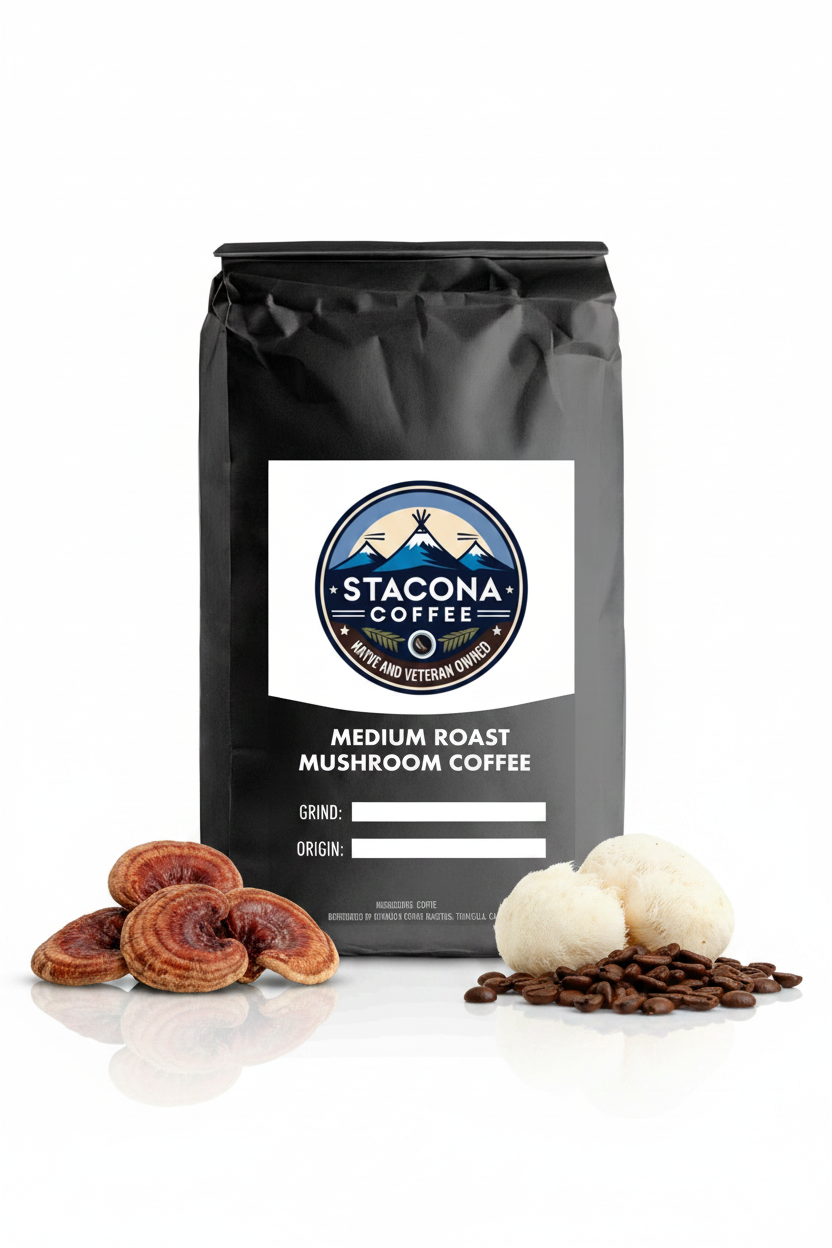
Mushroom Coffee Recipe: 3 Easy Ways to Make It
Make mushroom coffee hot, iced, or as a simple cold brew with practical recipes that fit the way you already drink coffee.
Read Guide →